Lunar Eclipse, with Lightning

Labels: astronomy
posted by Jeffrey A. Carver @ 10:30 AM
0 comments


(and other metaphors for life)
Labels: astronomy
posted by Jeffrey A. Carver @ 10:30 AM
0 comments
Last night’s supermoon lunar eclipse was gorgeous, even viewed from our suburban Boston driveway. It gave me a reason to bring out my Meade ETX-90 Maksutov-Cassegrain telescope, which is a compact 3.5 inch reflector that I don’t use as much as I would like. I don’t have equipment for taking pictures, so I’ll show you some that other people took.
The thing that most struck me was how much the reddened Moon, with its dark, patchy maria, looked like pictures of Mars, especially from the days when astronomers had only modest ground-based telescopes—but even now, with the Hubble. I'll show you one of those, below the moon shots.
The other thing, as I peered through the lens wishing I could see the Apollo lander equipment, was that twelve men walked on that world over forty years ago. It’s high time some more men took that stroll—and some women, too. And maybe for some to go there to stay.
The third thing was, this was an anniversary of sorts for Allysen and me. It was the last supermoon eclipse, in 1982, that got us started dating!
Here (if the code works) is a slideshow the Telegraph put together on short notice. Our view probably looked most like the one you’ll see from Paris, here.


Labels: animal friends, astronomy
posted by Jeffrey A. Carver @ 10:30 AM
0 comments
NASA has put together a short animation from some of the images taken by New Horizons, showing amazing detail of the mountain range and one of the smoother sections. This is only the beginning. Think of it! We are all part of the generation of Humanity that got to see Pluto up close for the first time! (Actually, come to think of it, I have lived to see, with the rest of the world, every planet in the solar system up close for the first time. That’s pretty amazing.)

posted by Jeffrey A. Carver @ 10:00 AM
0 comments
 |
| Charon and Pluto, seen from New Horizons |

Labels: astronomy, Pluto, science fiction, space
posted by Jeffrey A. Carver @ 11:30 AM
0 comments
Want to be mesmerized for three and a half minutes? Open this on a good monitor, click the “full screen” icon in the lower right of this video, turn up the sound, and sit back and journey the solar system. See if you recognize the voice.
Labels: adventurers, astronomy, exploration, Mars, space, the human mind, wishful dreams
posted by Jeffrey A. Carver @ 3:00 PM
0 comments

 |
| http://xkcd.com/1446/ |
Labels: astronomy, exploration, science, space, The Chaos Chronicles
posted by Jeffrey A. Carver @ 7:11 PM
0 comments
It took a loyal reader to point it out to me: The coming close encounter of Comet ISON with the sun is kind of reminiscent of a fateful ride taken by John Bandicut in my novel Neptune Crossing. (Tip of the space helmet to Kyle Michael Jeynes for noting it on my Facebook page.) Of course, in Bandicut's case, he and the quarx Charlie were chasing the comet.

Labels: astronomy, ebooks, free ebooks, my books
posted by Jeffrey A. Carver @ 2:58 AM
2 comments
Friday the Nineteenth is the day the Cassini spacecraft, circling Saturn, will turn its cameras back toward Earth, and NASA and JPL want us to go outside and wave. What a photo op! If you're in America and standing outside at around 5:30 p.m. EDT, you'll be in the photo. Look to the east and wave to the open sky!
Here's the official word on the timing of the shot:
"The Cassini portrait session of Earth will last about 15 minutes from 2:27 to 2:42 p.m. PDT (21:27 to 21:42 UTC)." The Americas will be facing Saturn during that time. Other parts of the world, I'm sorry. Next time.

Labels: astronomy, exploration, public affairs, quirky, space
posted by Jeffrey A. Carver @ 11:10 PM
1 comments
Speaking of great causes, if you like science fiction that actually gets the science right, there's nothing better than the annual Launchpad Astronomy Workshop, which since 2007 has been training writers in the basics, as well as some of the finer points, of astronomy. In the early years, when I attended, Launchpad was paid for by grants from NASA and NSF. Now, funding is scarce, and the workshop needs a helping hand from people who care. Science fiction, after all, provides inspiration for future generations of scientists, as well writers, artists, and readers of all kinds.
If you'd like to help, there's just one more day left to make a donation to the crowd-funding of this important program. There are all kinds of free books available to reward donations—all donated by author or publisher-alums of the program (like me!) Check out the donations page and get a free book while helping a great cause!
Labels: astronomy, free ebooks, science fiction, writing
posted by Jeffrey A. Carver @ 6:27 PM
0 comments
Woot! It's finally happened! Researchers have announced the discovery of an Earth-sized planet in the star system nearest to ours. Called Alpha Centauri Bb for now (it orbits the star in the Alpha Centauri group called Alpha Centauri B), this planet is roughly 3.6 million miles from its sun, compared to our 93 million miles from our sun. So it's pretty hot, certainly not in the range for most Earthlike life forms. But this discovery suggests the likelihood of other planets in the star system. Most systems have multiple planets, and the ones closest to their suns are the easiest to detect.
This is so insanely, massively cool. We've dreamed of it for years. And now we've learned that our nearest neighboring star system has a planet the size of ours, and may have other planets in the habitable zone.
The news takes me back to memories of one of the first paperback SF novels I ever read as a kid: Robert Silverberg's Revolt on Alpha C.
Who's ready to join me in starting construction of a starship?
Labels: astronomy, science fiction, space
posted by Jeffrey A. Carver @ 3:11 AM
1 comments
I can never seem to catch our animals, or for that matter, my family members, on camera when they're in the act of doing something interesting. I always get something blurred, or dull, a few moments later. But NASA does a better job. The Mars Orbiter, with split-second timing, caught this photo of Curiosity on its way down to the planet's surface.
The inset is a close-up of the landing craft hanging from the huge, supersonic parachute that helped slow Curiosity to a safe landing speed. If this doesn't win an award for best action photography, I don't know what will.

posted by Jeffrey A. Carver @ 4:42 PM
0 comments
Something to watch while you're waiting for Mars to grow to full size in the viewscreen. Set it to full-screen mode and turn up the sound.
Nocturnal - Scenes of the Southern Night, Western Australia and Chile. from Colin Legg on Vimeo.
Tip of the hat to Astronomy Picture of the Day for this one.
posted by Jeffrey A. Carver @ 12:30 AM
0 comments
NASA's latest wonder-probe to Mars, Curiosity, is scheduled to land on Mars at 10:31 p.m. EDT, on the night of August 5th. Be there, and don't even think about being square. NASA has worked out a way for folks online to experience the event using some kind of 3D software on their computers, and even on their Xbox game sets. Who says NASA doesn't have a sense of wonder? Go here to see all the different activities they've worked out for folks to do in connection with the Mars landing, or here to get set up with the Unity Web Player to experience the landing to full effect. They're encouraging people to start getting set up now, so everyone isn't crashing the servers getting set up on the night of the 5th. Go here if you want to learn more about the mission.
Just how exciting could this landing be? After all, we've landed on Mars before. But not like this. Take a look at this video to see just how difficult this feat really is. If this doesn't get you pumped, better check to see if you still have pulse. Pop it up to full screen if you can.
If you have trouble viewing it on this page, go to the source.
Labels: astronomy, exploration, Mars, science, space, videos
posted by Jeffrey A. Carver @ 1:25 AM
1 comments
Mars shouldn't get all the glory. I used to travel to both planets regularly in my head, via the great stories I read. One of my favorites, when I was about twelve, was the Tom Corbett Space Cadet book, Revolt on Venus.
Venus just made the last transit across the face of the sun that will be visible from Earth this century. Here's a lovely montage of video images in various wavelengths taken and edited together by NASA. Who says NASA has no poetry in its soul? You can make it full screen for best effect.

Labels: astronomy, science, science fiction, space, videos
posted by Jeffrey A. Carver @ 1:00 PM
0 comments

posted by Jeffrey A. Carver @ 1:19 AM
1 comments
The recent arrival of the privately designed-and-built Dragon space capsule at the International Space Station dovetails nicely with another recent event: the announcement of a privately funded initiative called Planetary Resources, Inc., to seek out and mine near-Earth asteroids.
 Both dovetail nicely with my own initiative: the release of my short story "Dog Star" as a standalone ebook. The dovetailing has to do with the fact that "Dog Star" is about a young asteroid miner who finds himself grounded on just such as asteroid, just him and his disabled ship... and his trusty "smartmutt," an enhanced border collie named Sam. Dogs who can discuss astrophysics with you while thinking about digging on an asteroid aren't a dime a dozen even in this future. Sam has to prove his mettle while helping his human dig his way out of this life-threatening jam.
 Labels: astronomy, ebooks, publishing, short stories, space
posted by Jeffrey A. Carver @ 2:19 AM
0 comments
Congress is right now considering future budgets for the funding of our space program, and it's got me extremely worried. The Obama administration has proposed deep cuts, especially for planetary sciences. This is crazy, stupid, and short-sighted, and I call upon Congress to turn this thing around—please! Let's continue funding our world-class space program, especially for space and planetary sciences, which since the Apollo days have been the capstone of American scientific exploration. The U.S. has already pulled out of one important international planetary mission, based just on the proposed budget. It would be a travesty to cancel other cutting-edge space missions.
It's practically a given most of the American public thinks we spend a lot more on the space program than we actually do. In fact, NASA's budget has always been a drop in the bucket compared to the Defense Department's. Even at the height of the relatively extravagant days of the Apollo Moon landing program, the space program only accounted for a few percent of the federal budget. Since then it's been sharply cut back. And now they want to cut it back even further. This despite the fact that every dollar spent on space helps to stimulate the economy, maintain our leadership in science and technology, inspire young scientists and engineers—and that's in addition to advancing our knowledge of the universe, and laying the groundwork for a future spacefaring civilization.
The Obama budget would put the brakes on all of this. And when you put the brakes on a programs like this, you don't just slow things down, you cause enormous disruption to long-range endeavors and put highly trained people out of work, people whom you might not be able to get back a few years down the road. I'm an Obama supporter, but this may be his administration's single most misguided action.
To voice your support of space exploration, contact your Congress critter. One way you can do that is by signing on with the message from the Planetary Society, which you can dispatch to your representatives here.
Labels: astronomy, public affairs, science, space
posted by Jeffrey A. Carver @ 2:16 AM
1 comments
Settle in with a mug of good coffee or hot chocolate, pop the video up to full-screen, set the sound to romantically soft, and enjoy this with a friend (real or imaginary). From Randy Halverson of dakotalapse.com.
Temporal Distortion from Randy Halverson on Vimeo. (Click and scroll down to read about what you're seeing, and how it was done. Also, note the composer of the music: Bear McCreary of BSG fame.)
posted by Jeffrey A. Carver @ 4:56 PM
0 comments
 |
Paper books, too! And now audiobooks! |
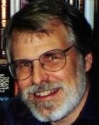
Most people know me as a science fiction writer or as a dad. My most recent novels are Sunborn and Battlestar Galactica: the Miniseries (novelization). My continuing project is The Chaos Chronicles, and Sunborn is the latest tale in that series. I also wear the hat of educational web content editor, technical writer, home handyman, wrestling dad, dog walker, and private pilot temporarily grounded by funding depletion. (Maybe I wear too many hats.) I have a wife, two daughters, a cat, and a dog. I really should get more sleep. Though I grew up in Huron, Ohio, I have lived for many years now in the Boston area. Check out downloads of my fiction at http://www.starrigger.net.

 |
|  |
|